
Solar panels need less looking after than almost anything else on your house. There are no moving parts, rain keeps most sloping roofs clean enough, and the main jobs are watching your monitoring app, replacing the inverter once in the system's life, and having everything inspected every year or two. Here is what matters, what does not, and what the warning signs look like.
What needs maintaining and what does not
The panels themselves are sealed glass and aluminium. A good panel is expected to last 30 years or more, and manufacturers back that with a performance warranty. The rails and roof fixings are passive too, although storms and ageing roofs can loosen them over time.
The parts that wear are the electronics: the inverter, which converts the panels' direct current (DC) into the alternating current (AC) your home uses, any optimisers fitted behind the panels, and the battery if you have one. Cable connectors on the roof can also work loose or let in moisture. Our guide to how solar panels work explains what each component does.
Cleaning: when rain is enough and when it is not
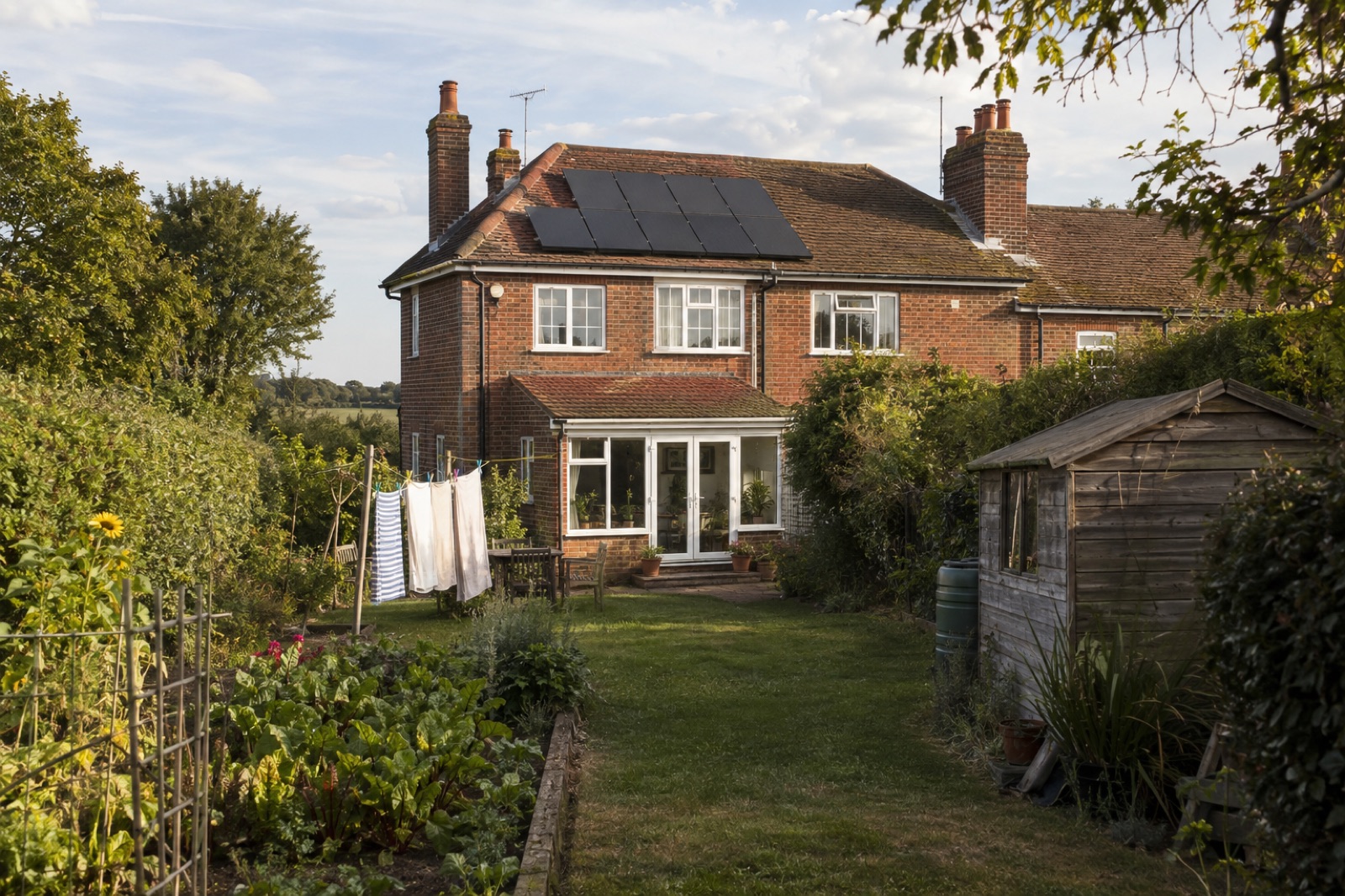
On a roof pitched at 15 degrees or more, UK rain washes off most dust and pollen. The Energy Saving Trust suggests checking panels every 12 to 18 months and cleaning them only if there is visible dirt. Most sloping home roofs never need more than that.
Cleaning earns its keep in a few situations:
- Flat or low-pitch arrays: dirt collects along the bottom edge of each panel instead of washing away.
- Heavy bird activity: droppings do not rinse off in rain and can shade individual cells.
- Nearby trees, roads or farmland: sap, traffic grime and harvest dust build up faster.
- Lichen and moss: common on shaded edges and under overhanging branches.
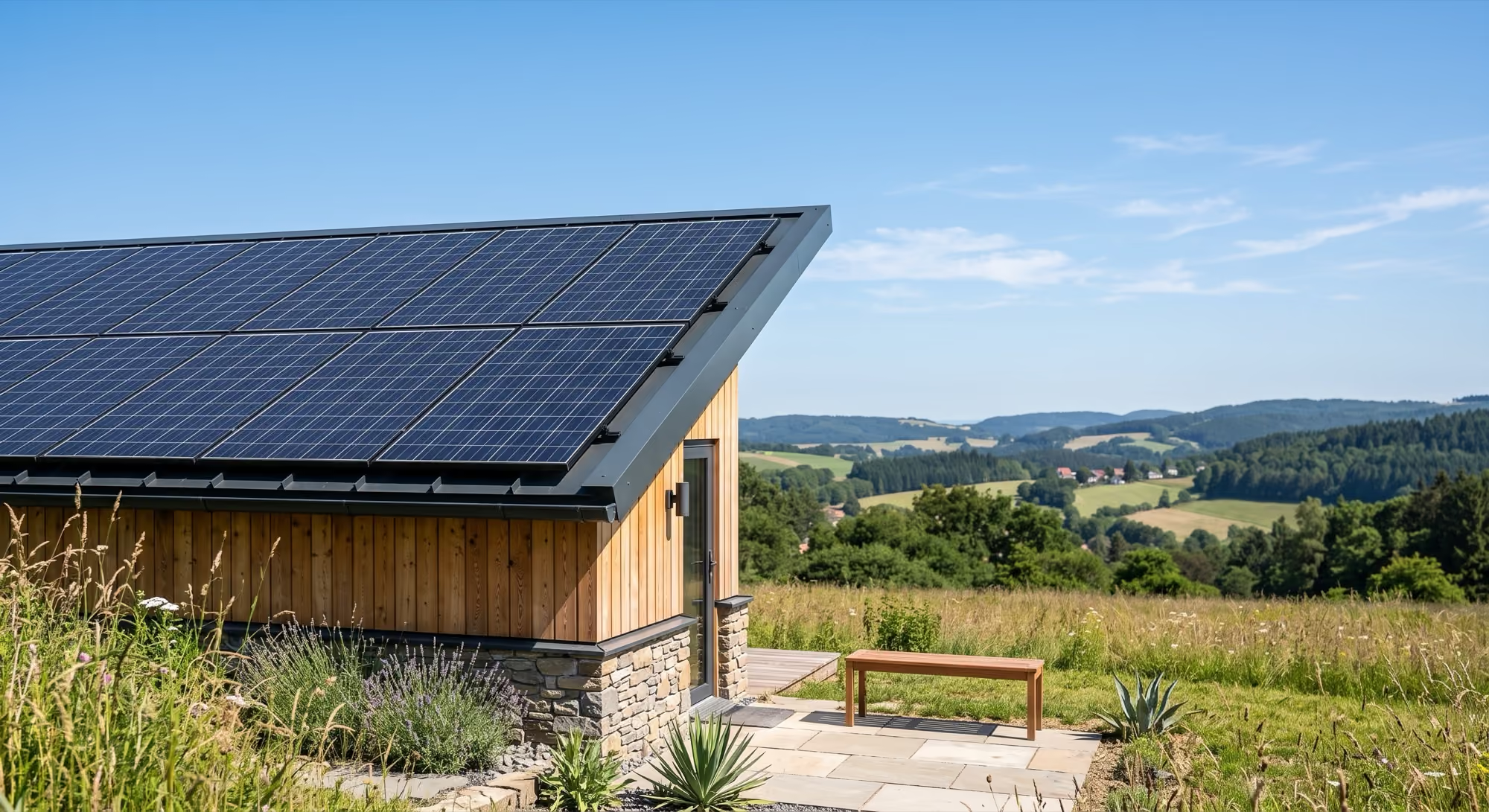
Do not climb onto the roof, and avoid pressure washers, detergents and abrasive brushes, which can damage the glass coating and may affect your warranty. A professional clean uses deionised water and soft brushes on long poles. Ground-mounted arrays are the exception, and a gentle rinse with a hose is usually fine.
Pigeons, inverters and other common problems
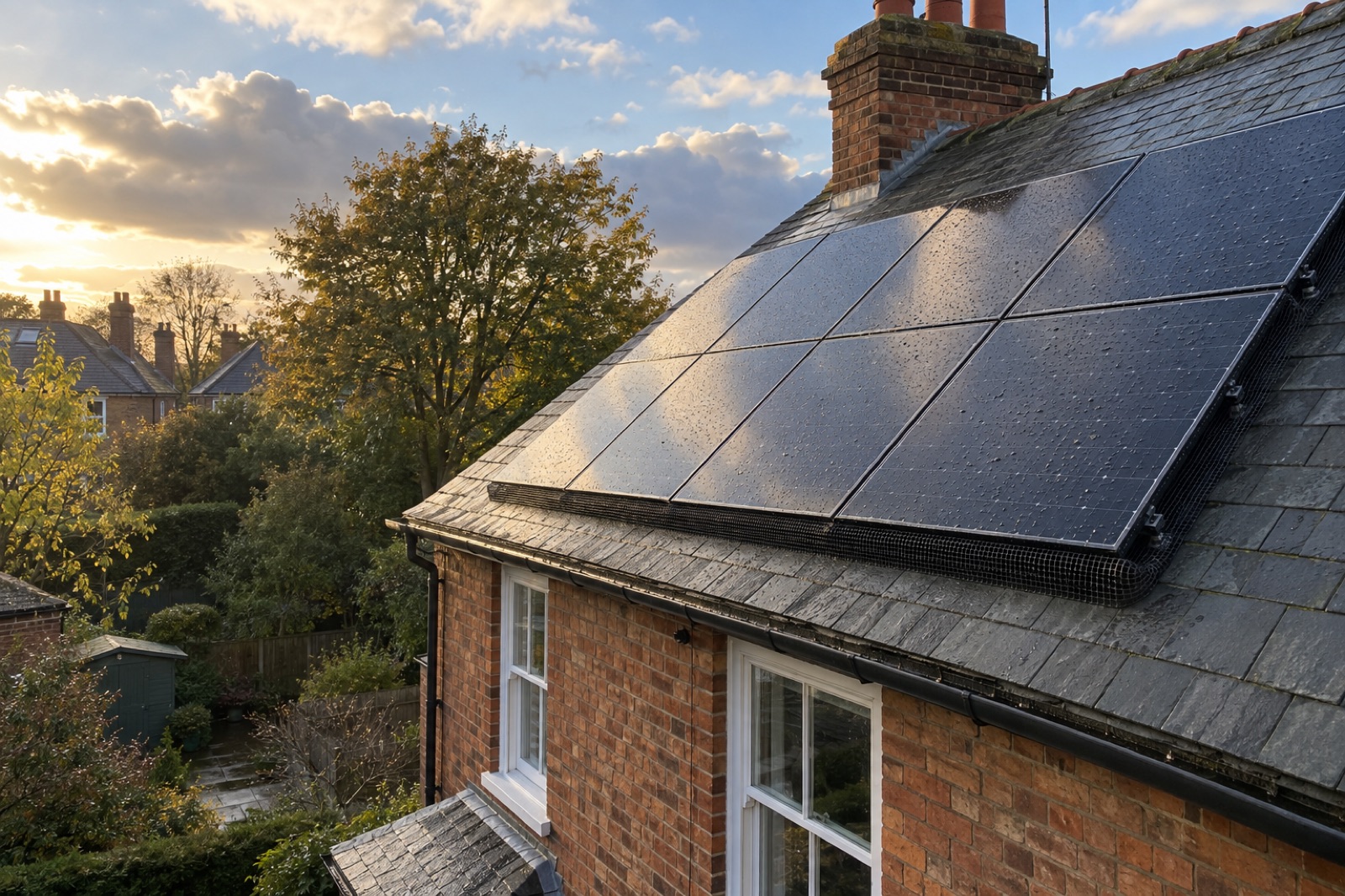
The problem we meet most often on London roofs is pigeons. The gap under an array is sheltered and warm, and a nesting colony brings noise, droppings and damaged cables. Bird-proofing mesh clipped around the edge of the array keeps them out, and it is far easier to fit before they move in than after.
The inverter is the part most likely to need replacing. The Energy Saving Trust puts typical inverter life at 10 to 15 years, with a home replacement usually costing around £800, so plan for one replacement over a 25 to 30 year system life. Inverter warranties are commonly five to 12 years, and many can be extended.
Other faults to know about:
- A blank or red-lit inverter display: often a tripped isolator or a grid disturbance, sometimes a failed inverter.
- One string producing less than another: a loose connector, a cracked panel or a failed bypass diode.
- A battery that stops charging: usually a communication or firmware fault between battery and inverter.
- Damp or staining in the loft: a slipped tile or flashing near a roof fixing, which needs attention quickly.
Reading your monitoring app
Your monitoring app is the cheapest maintenance tool you have. Check it weekly for the first month so you learn what a normal bright day and a normal grey day look like, then monthly after that. Compare each month with the same month last year, or with the monthly figures in your design estimate, rather than with the month before, because December generation is a small fraction of June's.
The warning signs are a flat line on a sunny day, a sudden drop that does not recover after rain, or a gap that slowly widens against the estimate. A very gradual decline is normal: panels lose a fraction of a percent of output each year, which is what their performance warranties allow for. Our guide to solar savings and payback shows how that affects long-term returns.
Worked example: what an unnoticed fault costs
Take a 6 kW home system. As an illustration, say it produces around 23 kWh on an average June day (your own design estimate gives the real figure). If the inverter trips and nobody notices for six weeks, the loss is 42 days × 23 kWh = 966 kWh. Valuing each unit at an assumed 20p, averaging what you would have used and exported, that is 966 × £0.20 = £193.20, all from a fault that a monitoring alert would have flagged on the first day.
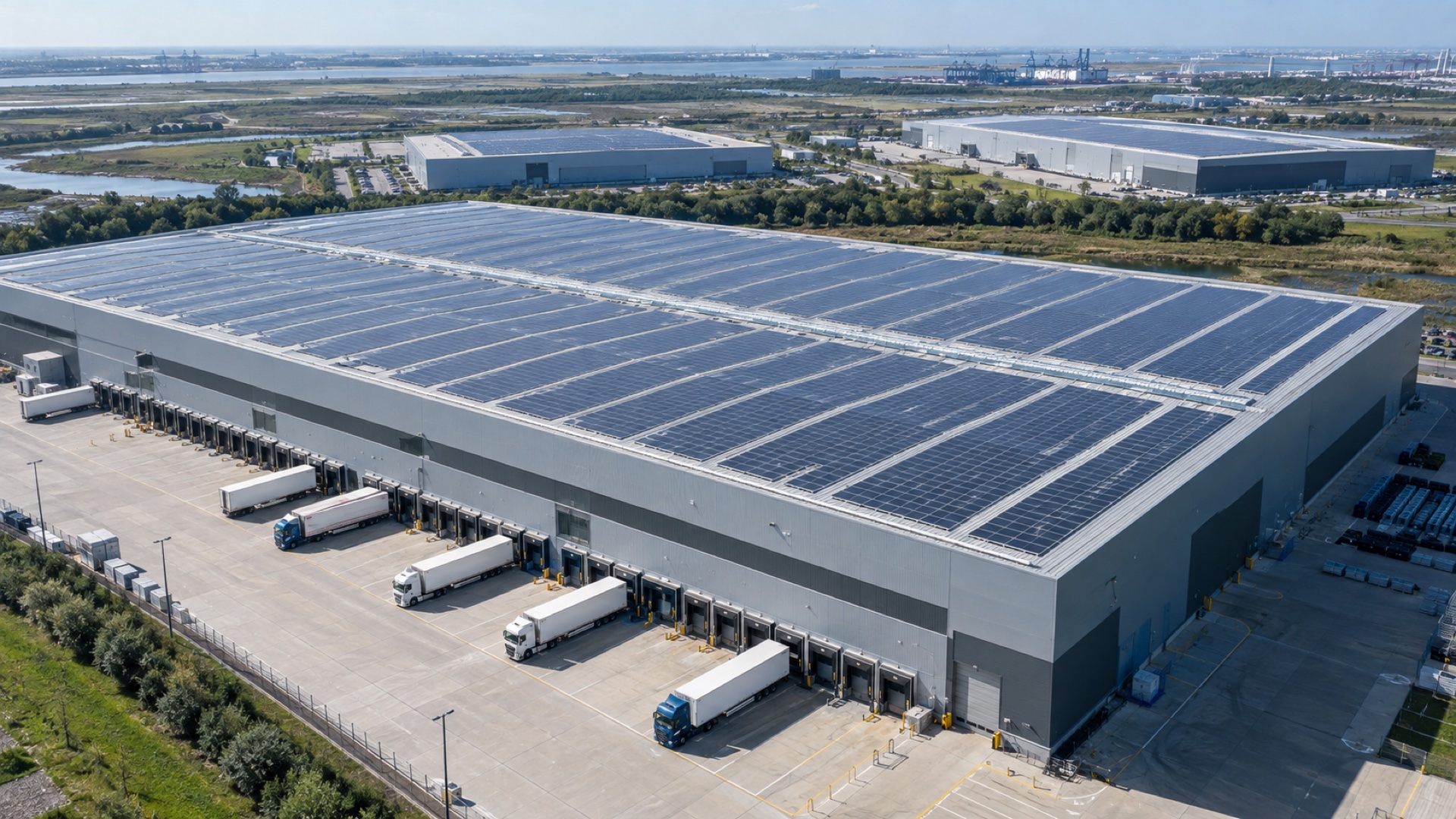
At commercial scale the stakes rise quickly. Across the three Thames Gateway distribution sites, which generated 1.21 GWh (1,210,000 kWh) in their first year, a 1% shortfall is 1,210,000 × 0.01 = 12,100 kWh. The operator has a five-year maintenance and cleaning contract with us, and all three roofs report into one dashboard, which makes a dip at any one site easy to spot.
Warranties and what an annual service covers
A typical system carries several overlapping warranties, and knowing which covers what saves time when something goes wrong:
- Panel product warranty: defects in materials and build, commonly 12 to 25 years depending on the manufacturer.
- Panel performance warranty: a guaranteed share of original output, commonly 80 to 90% after 25 to 30 years.
- Inverter warranty: usually five to 12 years as standard, often extendable.
- Battery warranty: commonly around 10 years, usually with a minimum remaining capacity.
- Installer workmanship warranty: covers fixings, cabling and roof work, and varies between installers.
Manufacturers expect a system to be installed and looked after properly, so keep your handover pack and a record of every service visit.
An annual service fills the gap between what the app can tell you and what someone on the roof can see. Our maintenance visits follow the same checklist every time: a deionised-water clean and close inspection of every panel for cracks, delamination and hot spots; insulation resistance, string voltage and earth continuity tests; inverter firmware updates and a review of the fault log; and a written report comparing actual generation with the modelled yield. Plans with remote monitoring add an alert to our engineers if output drops below the model.
A sensible routine for your system
For most homes the routine is short: glance at the app monthly, compare each year with the last, keep the handover pack safe, and have the system inspected every year or two, or straight away if generation drops without explanation. If you are not sure whether a dip is the weather or a fault, get in touch and we will look through your monitoring data with you.