Most UK homes pay between £6,000 and £12,000 for a solar panel system without a battery, and a typical 4 to 8 kW system with a battery costs between £8,000 and £14,000 installed. Domestic solar panels and batteries currently carry 0% VAT, so the quoted price is the price you pay. Where your own system lands depends on its size, your roof and the parts you choose.
Typical solar panel prices by system size
Solar systems are sized in kilowatts (kW), which is the most power the panels can produce at any one moment. Your bill is measured in kilowatt hours (kWh), which is energy delivered over time. A 4 kW system running flat out for an hour produces 4 kWh. In our experience, each kW of well-placed panels in London and the Southeast produces roughly 850 to 950 kWh a year.
At the time of writing, these are the ranges we see for complete, MCS-certified installations on straightforward pitched roofs:
- Around 4 kW (about 10 panels), panels only: £6,000 to £8,000.
- Around 6 kW (about 14 panels), panels only: £7,500 to £10,000.
- Around 8 kW (about 19 panels), panels only: £9,000 to £12,000.
- Battery fitted at the same time: roughly £3,000 to £5,000 for 5 to 10 kWh of storage.
- 4 to 8 kW with a battery: most land between £8,000 and £14,000. Larger batteries, in-roof panels or difficult access can take a system above that.
Price per kW falls as systems get bigger. Scaffolding, the inverter, the electrical work and the paperwork cost much the same whether you fit 10 panels or 20, so the extra panels are the cheap part. That is one reason we rarely recommend leaving usable roof space empty if your usage justifies it.
What should be included in a solar quote
A proper quote is a complete, fitted price with nothing left to add later. It should list:
- Panels: make, model, wattage and number, plus the product and performance warranties.
- Inverter: the box that converts the direct current (DC) your panels make into the alternating current (AC) your home uses. A hybrid inverter can also manage a battery.
- Battery: usable capacity in kWh, warranty length and where it will sit.
- Mounting and roof work: on-roof or in-roof, and how tiles or slates are handled.
- Scaffolding: erection, hire and removal.
- Electrical work: isolators, cabling, a generation meter and any consumer unit upgrade.
- DNO paperwork: your Distribution Network Operator (DNO) runs the local power network and must be told about your system. Systems up to 3.68 kW on a standard single-phase supply can usually be notified after installation. Larger systems need the DNO's approval first, which can add several weeks.
- Certification and handover: the MCS certificate, which you need for export payments, plus monitoring set-up and registration for the Smart Export Guarantee (SEG), the scheme that pays you for electricity you send to the grid.
If any of these are missing or listed as extras, ask why before you compare prices.
What pushes the cost of solar up or down
The panels themselves are a smaller share of the price than most people expect. The things that move a quote most are:
- Roof access: a three-storey townhouse needs more scaffold than a bungalow, and a rear roof reached over a conservatory needs more still.
- Roof covering: natural slate takes longer to work with than concrete tile, and flat roofs need ballasted frames.
- Panel style and mounting: all-black panels and in-roof mounting look neater but cost more than standard on-roof fixings.
- Shading: chimneys, trees and dormers may call for optimisers, small devices that stop one shaded panel dragging down the rest.
- Battery size: the single biggest optional cost. Not every home needs one.
- Electrical upgrades: an older consumer unit may need replacing to meet current regulations.
Costs come down when the roof is simple, the system is larger and scaffold is already up for other roof work. Our guide to whether your roof is suitable for solar covers orientation, pitch and space in more detail.
VAT on solar panels and batteries in 2026
Solar panels and batteries supplied and installed in homes in Great Britain are zero-rated for VAT until 31 March 2027. From 1 April 2027 the rate is currently due to rise to 5%. The zero rate covers the equipment and the labour when both come from the same installer, and since February 2024 it also covers a battery fitted on its own to an existing home.
On a £10,000 system, the move to 5% would add £500. That is worth knowing if you are planning to go ahead within the next year, but it is not a reason to rush a decision. Businesses pay the standard 20% rate, which VAT-registered firms can usually reclaim.
Why the cheapest quote is rarely the cheapest system
A solar system is paid for once and then earns for 25 years or more, so the useful measure is how much electricity each pound buys over the system's life. Two quotes that look similar on paper can perform very differently on your roof.
Here is a worked example. Two installers quote for twelve 430 W panels, which is 5.16 kW, on a roof with a chimney that shades part of the array in the afternoon.
- Quote A: £7,200, a basic string inverter and no shading assessment. That is £7,200 ÷ 5.16 = about £1,395 per kW.
- Quote B: £7,900, with optimisers, bird protection and a longer workmanship warranty. That is £7,900 ÷ 5.16 = about £1,531 per kW.
At 900 kWh per kW, a well-designed 5.16 kW system should produce about 4,644 kWh a year. If the unmanaged chimney shadow costs Quote A 10% of that, it loses about 464 kWh a year. Valued somewhere between a 15p export rate and the current 26.32p price cap unit rate, that is £70 to £122 a year. The £700 difference is recovered in six to ten years, and Quote B keeps earning more for the rest of the system's life.
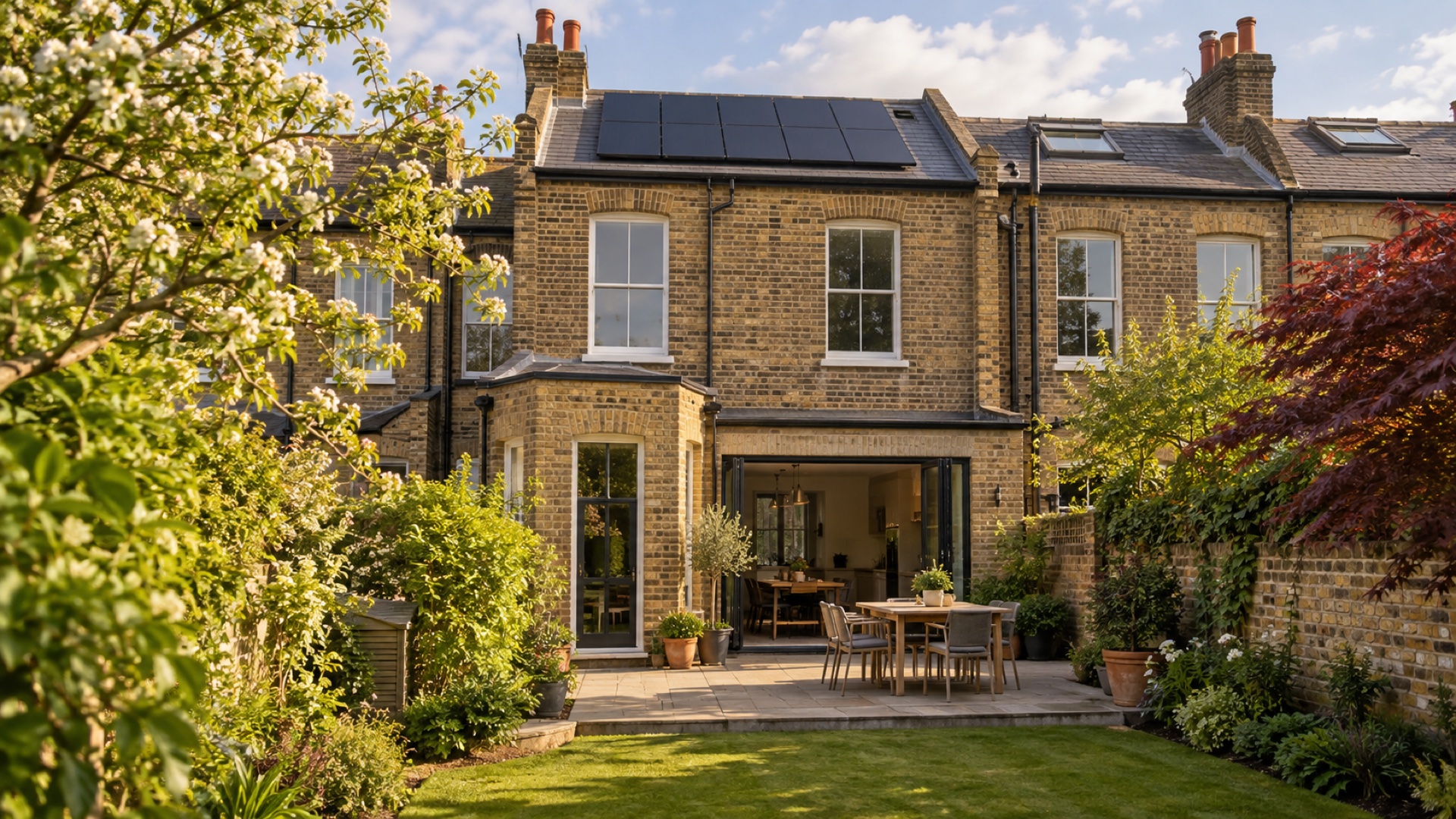
We saw this in practice at a Victorian terrace in Dulwich, where a neighbour's chimney shades the rear roof in late afternoon. Optimisers mean the shadow only affects the two panels it falls on. To see how generation turns into savings, read how much solar will actually save you.
Getting a quote you can compare
Before you speak to any installer, have a recent electricity bill to hand showing your annual kWh usage, and a rough idea of whether you want a battery now or later. Ask every installer for the expected annual generation in kWh, not just the system size, so you can compare cost per kWh rather than headline price.
We model your roof and usage before quoting so the number is yours, not an average. You can read more about our home solar service, or get in touch for a quote built around your roof.